<>

Albert Camus

Don't walk behind me; I may not lead. Don't walk in front of me; I may not follow. Just walk beside me and be my friend.

Showing posts with label Religion. Show all posts

Wednesday, December 8, 2021

mystery, corruption, intrigue and plenty of “food for thought”... How to Control an Entire Planet by C.D. Hill-Lavalle

"Fantastic...stimulating!" "One of the most interesting books I've ever read, second only to the Bible!" 
— Ms. .J. G. Shuker (Great-grandmother & native elder to 14 children, and a retired pharmacist assistant.)


Tuesday, November 19, 2019

Christianity in the Americas Before Columbus by Gary Bowen

Pursuant to Fray Mier’s mandate to his Mexican countrymen, we too must instruct ourselves on those early Catholic missionaries’ writings, which give historical authenticity to the ancient preaching of the Gospel of Jesus Christ in the Americas.


Thursday, October 17, 2019

Pray Like A Pro: A Guide To Strategic and Effective Prayer by Carlene Kelly

"This is the prayer study guide you've been looking for.
The way that the prayer is broken down into each section is so insightful and helpful. A must-read for the study and topic of prayer." - Robert, Amazon

Monday, December 3, 2018

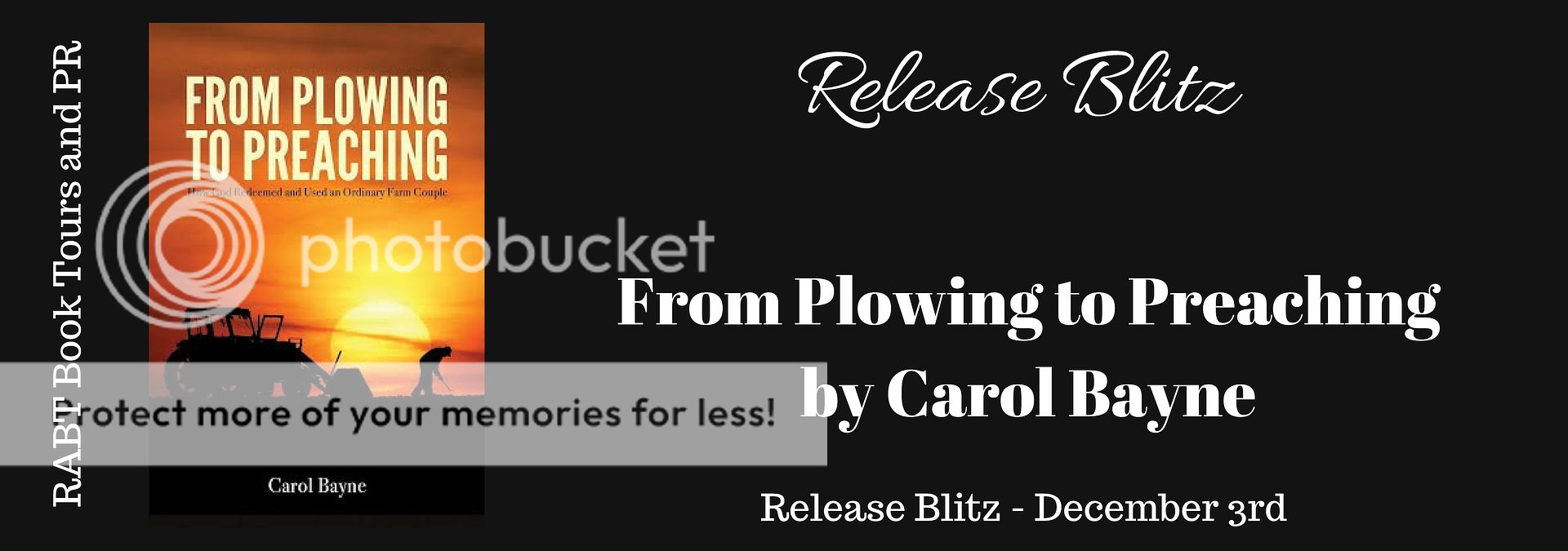
From Plowing to Preaching: How God Redeemed and Used an Ordinary Farm Couple by Carol Bayne

From her own brokenness, Carol shares lessons learned in the crucible of pain and disappointment and the beauty that can come from the ashes of our lives.

Monday, November 19, 2018

Our Gift-Giving God: A Devotional by Andrea Levin Kim


Has Christmas gotten to be just the same old, same old? Do you feel as if you're simply going through the motions, even though you know this should be a season of celebration and worship? Same tree, same Christmas songs, same baked goods.

Monday, September 25, 2017

the mysteries in the Bible... The Song of Solomon Revealed by Owen Sypher

The book of Song of Solomon is a spiritual book full of allegories or pictures where God used the natural to show the spiritual. By using the keys of understanding found in the Bible the author has unlock the hidden meaning of the book of Song of Solomon. 


Friday, July 7, 2017

modern suspense thrillers with a medieval mystery by Ken Fry

"...the supernatural elements, and their effect on the characters, are pure genius. Even an old cynic like me was entranced. The addition of a little historical flavour, in the shape of frequent glances into a beautifully depicted medieval Spain, gives the novel context, and a timeless magic I found addictive.This is polished fiction of the highest calibre, and I'm more than happy to award 5 stars." - Stuart Kenyon, author

Monday, February 29, 2016

a conspiracy thousands of years in the making - Evolution: The Revelation by Jim Reilly

The Revelation is Jim Reilly’s follow-up to his science fiction novel, Evolution. In The Revelation cloaked Ancient Visitors plan man’s future enslavement for a menacing purpose. Two groups, one in the present and one a thousand years in the future, investigate a conspiracy thousands of years in the making. 

Thursday, August 28, 2014

Happy Release Day! The Best of Jonathan’s Corner by CJS Hayward

Description:

The Best of Jonathan’s Corner, newly expanded after getting five star reviews , is a collection of varied works of Eastern Orthodox mystical theology. It spans many topics and many different genres of writing, but it keeps coming back to the biggest questions of all. It is inexhaustible: the works are independent, and you can read a few, many, or all of them to suit your taste. Fans of C.S. Lewis and G.K. Chesterton will love it.

The Best of Jonathan's Corner is a head taller than the others. It contains all of the best works of theology from Jonathan's Corner, and there's a lot to dig through—but only if you want. If not, feel free to enjoy and read as little or as much as you like.

This book is the author's favorite title out of all the books sold from this site (n.a. author's site).


Jonathan Hayward is a remarkably deep thinker with a pronounced skill for allegory. In the tradition of C.S. Lewis, he finds ways to make extremely subtle, complex material comprehensible, and even comfortably recognizable. While the title and foreword suggest that this is for Orthodox Christians, I think any believer who thinks about the "big ideas" of Christianity will find this a treasure of valuable insight. It's a great introduction to the spirit, thoughts, and work of this multifaceted young writer.- Amazon

EXCERPT


From "The Angelic Letters”

My dearly beloved son Eukairos;
I am writing to you concerning the inestimable responsibility and priceless charge who has been entrusted to you. You have been appointed guardian angel to one Mark.
Who is Mark, whose patron is St. Mark of Ephesus? A man. What then is man? Microcosm and mediator, the midpoint of Creation, and the fulcrum for its sanctification. Created in the image of God; created to be prophet, priest, and king. It is toxic for man to know too much of his beauty at once, but it is also toxic for man to know too much of his sin at once. For he is mired in sin and passion, and in prayer and deed offer what help you can for the snares all about him. Keep a watchful eye out for his physical situation, urge great persistence in the liturgical and the sacramental life of the Church that he gives such godly participation, and watch for his ascesis with every eye you have. Rightly,when we understand what injures a man, nothing can injure the man who does not injure himself: but it is treacherously easy for a man to injure himself. Do watch over him and offer what help you can.
With Eternal Light and Love,
Your Fellow-Servant and Angel


My dear son Eukairos;
I would see it fitting to offer a word about medicating experience and medicating existence.
When one of the race of men medicates experience by means of wine, that is called drunkenness. When by means of the pleasures of the palate, that is called gluttony. When by means of other pleasures, it is called lust. When by means of possessions and getting things, it is called avarice. Escapism is an ancient vice and a root of all manner of evils: ancient Christians were warned strongly against attempting to escape this world by medicating experience.
Not that pleasure is the only way; medicating experience by mental gymnastics is called metaphysics in the occult sense, and medicating experience by means of technology is a serious danger.
Not all technologies, and perhaps not any technology, is automatically a problem to use. But when technologies become a drone they are a problem. Turning on a radio for traffic and weather news, and then turning it off, is not a drone. Listening to the radio at a particular time to devote your attention to a concert is not a drone. Turning on a radio in the background while you work is a drone; even Zen and the Art of the Motorcycle Maintenance discusses what is wrong with mechanics having the radio on in the background. And texting to get specific information or coordinate with someone is not a drone, but a stream of text messages that is always on is a drone. Technology has its uses, but when technology is a drone, noise in the background that prevents silence from getting too uncomfortable, then it is a spiritual problem, a tool to medicate experience. And there are some technologies, like video games, that exist to medicate experience.
(Of course, technologies are not the only drone; when Mark buckles down to prayer he discovers that his mind is a drone with a stream of thoughts that are a life's work to quiet.)
More could be said about technologies, but my point here is to point out one of the dangers Mark faces. Not the only one, by any means, but he has at his disposal some very powerful tools for doing things that are detrimental. It's not just a steady stream of X-rated spam that puts temptation at his fingertips. He has all the old ways to medicate experience, and quite a few powerful technologies that can help him medicate his experience as well. And for that he needs prayer.
But what is to be done? The ways of medicating experience may be in some measure than many saints have contended with; the answer is the same. Don't find another way to medicate experience, or escape the conditions God has placed you in, trying to escape to Paradise. Don't ask for an easier load, but tougher muscles. Instead of escaping the silence, engage it. Prayerfully engage it. If your dear Mark does this, after repenting and despairing of finding a way to escape and create Paradise, he will find that escape is not needed, and Paradise, like the absent-minded Professor's lost spectacles, were not in any of the strange places he looked but on his nose the whole time.
A man does not usually wean himself of drones in one fell swoop, but pray and draw your precious charge to cut back, to let go of another way of medicating experience even if it is very small, and to seek not a lighter load but a stronger back. If he weans himself of noise that medicates uncomfortable silence, he might find that silence is not what he fears.
Watch after Mark, and hold him in prayer.
Your Dearly Loving Elder,
Your Fellow-Servant,
But a Wind and a Flame of Fire


About the author:
Christos Jonathan Seth Hayward wears many hats as a person: author, philosopher, theologian, artist, poet, wayfarer, philologist, inventor, web guru, teacher.

Some have asked, "If a much lesser C.S. Lewis were Orthodox, what would he be like?" And the answer may well be, "C.J.S. Hayward."

Called "Jack of all trades and master of many" by one boss, he also wears many hats professionally: open source / IT generalist, front end developer, JavaScript programmer, back end web developer, Pythonista, PHP and Perl user, Django developer, end to end web developer, Unix/Linux/Mac wizard, LAMP guru, SQL generalist, Unix shell (both using existing shells and implementing a new shell), system administrator, researcher, technical writer, usability advocate, UI developer, UX/IA enthusiast, and more.

Hayward has lived in the U.S., Malaysia, England, and France, and holds master's degrees bridging math and computers (UIUC), and philosophy and theology (Cambridge).

Friday, October 26, 2012

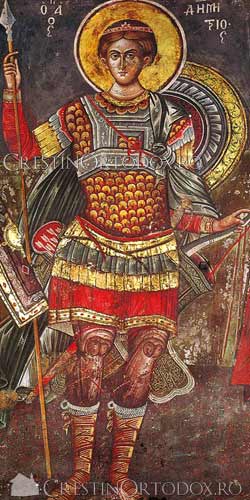
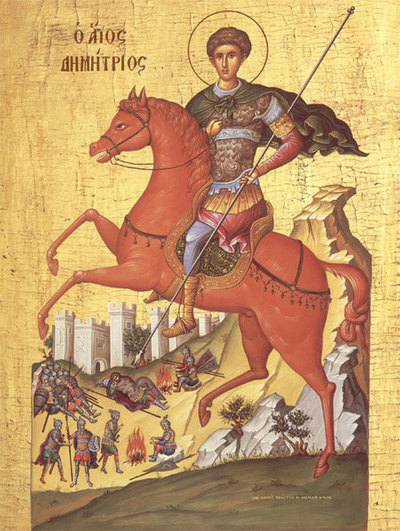
La Multi Ani, de Sfântul Dumitru!


Tradiții şi obiceiuri de Sfântul Dumitru

În credința populară, anul este împărțit în vară şi iarna. Dacă Sfântul Gheorghe încuie iarna şi înfrunzeşte întreaga natură, Sfântul Dumitru desfrunzeşte codrul şi usucă toate plantele. Există credința că în această zi, căldura intră în pământ şi gerul începe a-şi arăta colții.
În Ajunul sărbătorii Sfântului Dimitrie, se aprind focuri, peste care sar copii pentru a fi sănătoşi tot anul. Focul are şi menirea de a alunga fiarele şi de a încălzi morții. După ce focul este stins, țăranii aruncă un cărbune în grădină, ca aceasta să primească putere de a rodi.

Sfântul Dumitru este considerat şi patronul păstorilor. Este ziua în care ciobanii află cum va fi iarna. Aceştia îşi aşează cojocul în mijlocul oilor şi aşteaptă să vadă ce oaie se va aşeza pe el. Dacă se va culca o oaie neagră, iarna va fi bună, iar dacă se va culca o oaie albă, iarna va fi aspră. Un alt mod de a afla cum va fi iarna, este să urmăreşti mersul oilor în dimineața sărbătorii Sfântului Dumitru. Dacă dimineața se va trezi întai o oaie albă şi va pleca înspre sud, iarna va fi grea; dacă se va trezi o oaie neagra şi va pleca spre nord, iarna va fi uşoară.
Ziua Sfântului Dumitru era şi o zi a soroacelor, se terminau învoielile încheiate între stăpânii oilor şi ciobani la San-George, de unde şi zicerea că "la San-George se încaieră cainii, iar la Samedru se sfădesc stăpânii".
De Sfântul Dumitru se tocmesc servitorii pentru diverse treburi şi se strică stanele. Țăranii tund coama cailor pană la trei ani, ca să aibă păr frumos.

În anumite zone, țăranii îl cinstesc pe Sfantul Dimitrie, Izvoratorul de mir, ca fiind cel ce a dat oamenilor vinul, folosit la Sfanta Împărtăşanie.

Alte credințe în ziua Sfântului Dumitru:

- dacă de Sfântul Dumitru este vreme aspră, iarna va fi buna, iar de va fi vreme bună, toamna va fi lungă şi frumoasă;
- nu se piaptană, că-i primejdios de lupi;
- dacă luna va fi plină şi cerul acoperit de nori, iarna va fi aspră, cu zăpezi grele;
- se face pomană grau fiert cu unt, lapte sau brânză.
(sursa: CrestinOrtodox.ro)

În legendele populare româneşti, Samedru este asemănat cu Făt - Frumos. Samedru este văzut ca un om simplu, crescător de animale.
În ajun de Sf. Dumitru, la sate se aprind focuri mari (focurile lui Samedru). Pentru aprinderea focului trebuie ales un brad verde. Acesta va fi ales cu câteva zile înainte de cete de copii însotite de câțiva tineri. Pe înserat tot copiii sunt cei care aprind focul în prezența întregii suflări a satului. Dacă tinerii reuşesc să sară peste foc, înseamnă că se vor căsători în anul ce urmează, iar copiii vor fi sănătoşi. Cei vârstnici vor lua din focul aproape stins un tăciune pe care îl vor arunca în livadă pentru ca aceasta să fie roditoare anul viitor. Atunci femeile oferă participanților fructe de toamnă şi colaci.

- dacă în grădină a rămas o floare ce nu s-a ofilit, aceasta nu trebuie ruptă, ci lăsată acolo spre mângâierea sufletelor celor morți;
- în ziua de Samedru încep să fiarbă vinurile şi se mută pomii tineri în livadă;
- in Oltenia, daca tii aceasta sarbatoare conform obiceiurilor, se spune ca lupii nu iti vor manca vitele;
- în popor se spune că dacă până în această zi nu ți-ai plătit datoriile, le vei da înapoi dublu;
- în Bucovina cine seamană usturoiul după Samedru va avea parte în anul următor numai de pagubă.